
You hold others. Who holds you?
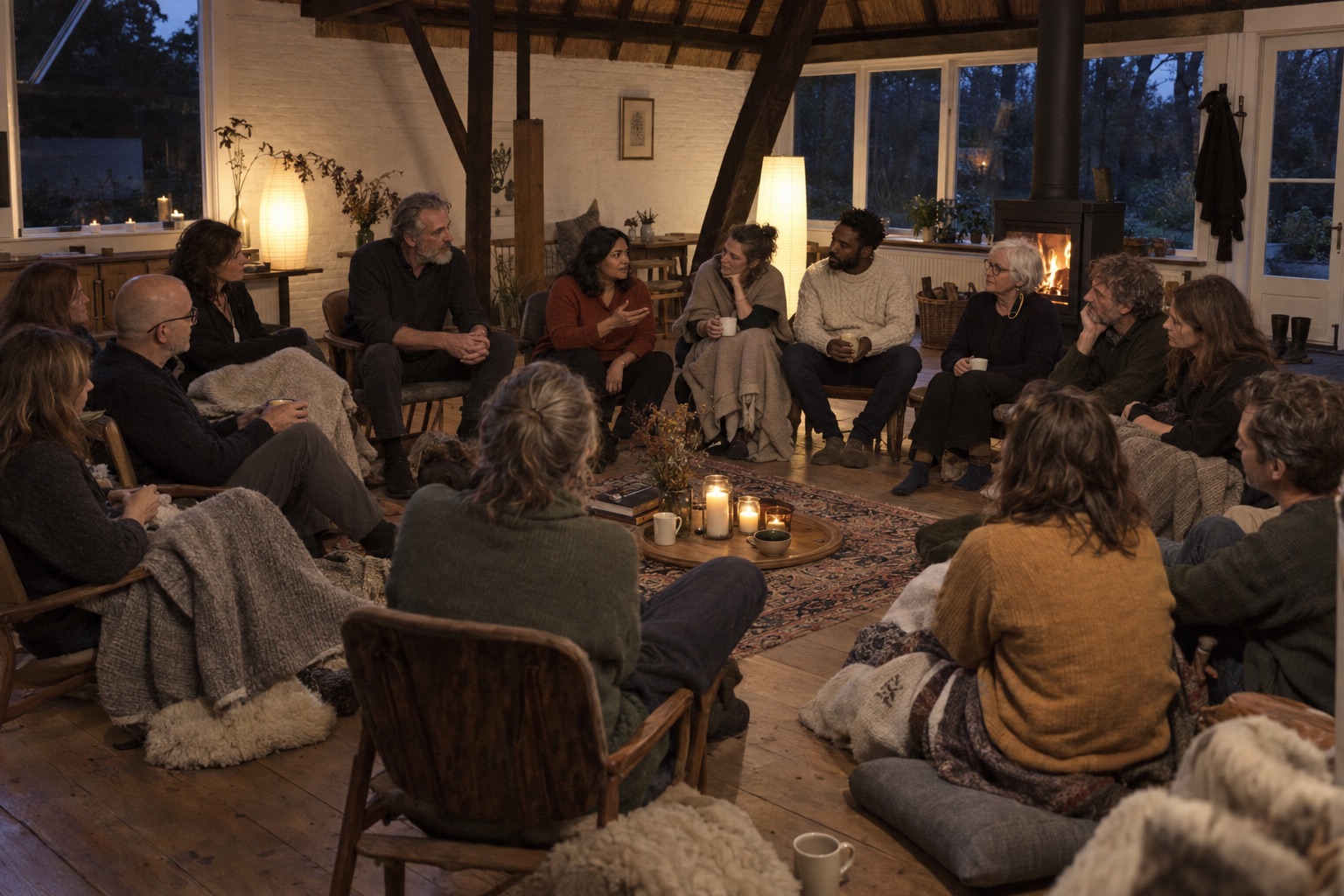
A 3.5-day reciprocal dyad retreat for psychedelic practitioners. Fourteen seats, seven dyads, one room.
The form
Not a training.
A room.
This is not a step toward a degree. There are no certificates.
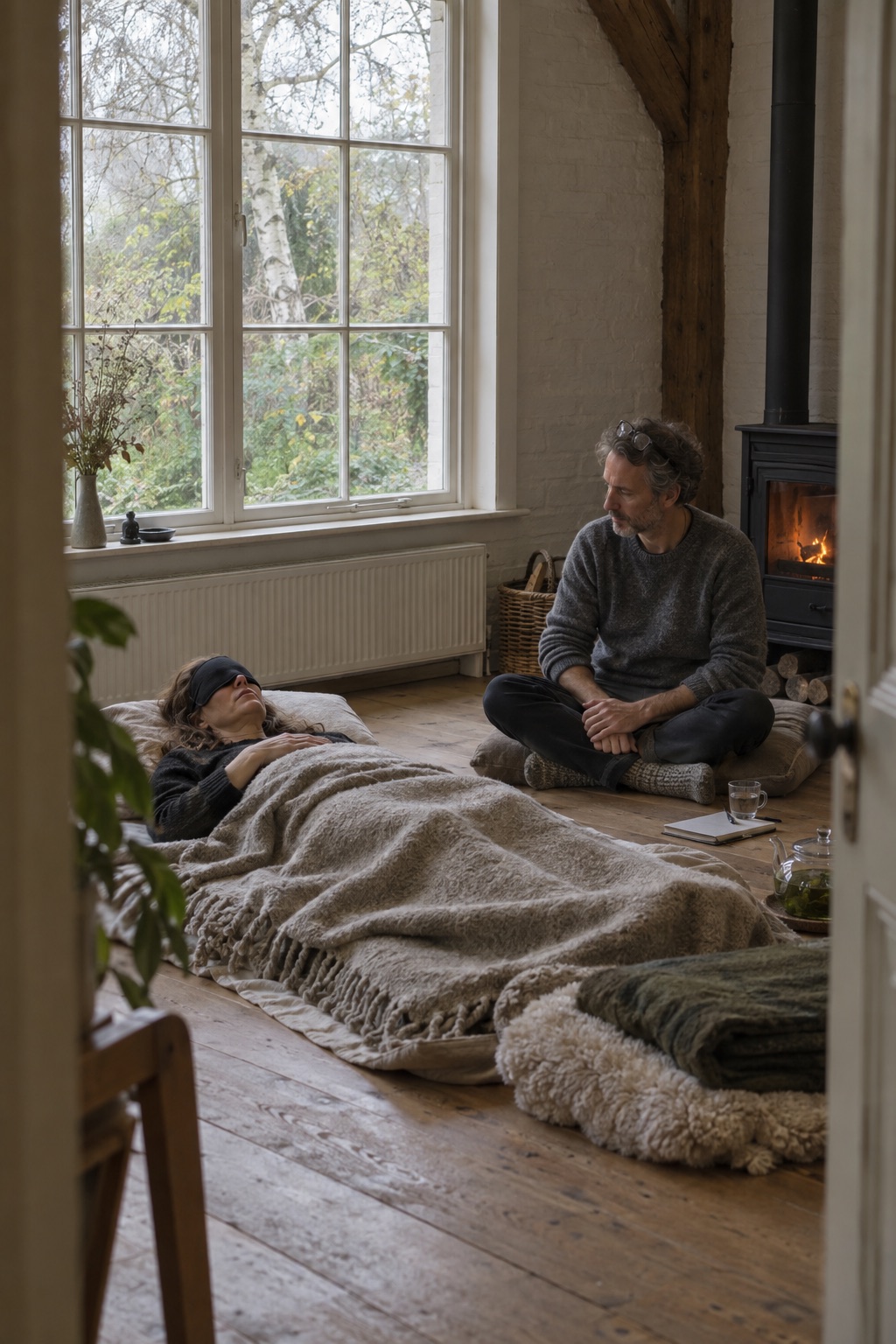
It is a small room in which you sit with someone, and you are sat for by that same someone. Two sessions with legal psilocybin truffles. The same partner across both. You hold space, and then space is held for you, by a peer who knows from the inside what holding costs.
The reciprocal dyad form is not decoration. It is a clinical hypothesis with a long lineage in contextual behavioral science and rooted in the science of intimacy: the relationship between practitioner and experiencer is the active ingredient of the work, and learning to embody both roles is the only honest way to teach it. The days include structured facilitation practice. The structure exists to make reciprocity possible, while allowing each participant to sink as deeply into these shared moments as they desire.
The retreat operates from a written manual authored for this room: clinical-operational on the experience days, contextual behavioral in the preparation arc, and explicit about how Western and relational frameworks meet when an experiencer's reality is not the facilitator's.
For three and a half days, the asymmetry that defines this work, one person witnessing, one person journeying, becomes reciprocity. That is the entire design.
What you'll work with
One protocol. Two sessions. One partner.
The days follow a clear structure rather than a curriculum, one that adapts to the group's needs and guides you at every step.
The reciprocal dyad
You will work with the same partner across two psilocybin sessions, you in each role once. The form is the method; the practice is the form.
The 4A Protocol
Acknowledge, Anchor, Assess, Align. Four moves for receiving non-ordinary content without prematurely interpreting it, taught on Day 1, practised in the room, and used again on the final morning with your own material.
Two readings, held at once
A way of holding the Western, clinical interpretation alongside a reading that is more relational, rooted in the spirit of contemplative spiritual traditions and shared cultural values associated with plant medicines. These two readings of the psychedelic experience will be held together without collapsing one into the other. The room is built to keep both alive while the experiencer chooses.
Touch and consent
A pre-session touch-and-consent practice, rehearsed in a clear state with the partner who will sit you the next morning. Touch is negotiated and agreed upon before any altered state, not improvised during one.
The parts that complicate
The rescuer, the one who needs to be the calm one, the one who uses other people's crises to avoid their own. Day 1 includes preparation work that is itself the work.
The Process
Clinical-operational on the experience days, contextual behavioral in the preparation arc, and explicit about cross-cultural framing. Rooted in decades of scholarship, training experience, and clinical practice across the team of facilitators. Written, dated, and revisable.
The framework you take into your own work the following week.
Who it's for
The wider sense of practitioner.
We use the word practitioner in its wider sense: someone who already sits with people through non-ordinary states.
Whether you work as a therapist, a facilitator, a clinician, or someone who guides groups, the room is held for you. Perhaps you have not held this space directly yourself, but your clients come back from retreats, from experiences with friends, or from their own experimentation, shaken out of their old stories and wanting to unpack them with you. This layered, experiential learning gives you both: a felt sense of the journey itself, and an understanding, from both sides, of what goes into building and shaping the container around it.
Like all practitioners, you are accustomed to using your very self as the tool you work with. You will arrive carrying what your work has cost you, and, if you do this honestly, what your own history has cost you. The room is built to allow you to put both down for three and a half days, and to be held while they surface. No part of the process is forced, though the space is designed for you to let go with as much willingness as you arrive with.
There is no certificate for the things you will learn in this space. You leave with the experience of having done this work and having had it done to you, with one peer, in one room, and together as a group, going through very individual experiences that all share something.
Beyond theoretical knowledge
It is about building the capacity to hold space while allowing yourself to be held. The awareness that comes from letting your heart guide you, and the embodied knowledge of the journey, will shape how you do this work in the future.
Schedule
Three and a half days. Two sessions. The roles reverse.
Two online meetings before. Three and a half days in Castricum. Two integration meetings after.
- Day 1: Arrival & preparation
Arrival, opening, partnering, and the relational preparation that grounds the two sessions to follow.
- Day 2: Session 1
One partner journeys, one partner sits. Five hours of contact, then space, then evening circle.
- Day 3: Session 2
The roles reverse. Same partner, same room, opposite chair.
- Day 4 (half): Integration & close
Integration in dyads with your own material, closing council, departure.
Faculty
Four facilitators. One manual.
Seven dyads. Fourteen participants. Four facilitators.
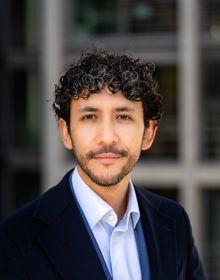
Sergio trained in Hamburg and Berlin as an anesthesiologist and emergency medicine physician, with an M.Sc. in Neuroscience and Psychology from King's College London. He previously co-founded and led Germany's first clinic for psychedelic-augmented psychotherapy, designed and led therapist-training programmes for psychedelic-assisted therapy in Germany, and teaches practitioners across European postgraduate programmes and at Harvard Medical School continuing education (February 2026).
He co-founded the Psychedelia Foundation in Berlin in 2024 (recognised under German foundation law) and serves as Co-Founder and Chair of its Board. His scholarly work sits inside contextual-behavioural science and inside the cross-cultural conversation about how Western and relational frameworks meet in a session room. He authored the manual this retreat is built from. Zen practitioner since age eleven.
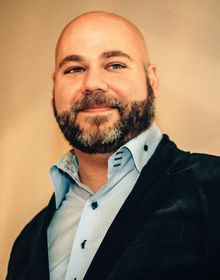
Matthew is a peer-reviewed Acceptance and Commitment Therapy trainer, a certified Functional Analytic Psychotherapy trainer, and a certified Compassion Cultivation teacher, credentialed across the family of contextual-behavioural and compassion-focused approaches this retreat draws on. His published work argues for the therapist as instrument and the relationship as the active ingredient of change, and he writes and teaches at the integration of ACT, FAP, and compassion practice. He has held workshops on applying principles of diversity and equity, alongside behavior therapy, in psychedelic-assisted work from Harvard to Yale, and at MAPS' Psychedelic Science conference.
The reciprocal-dyad form of this retreat is the native pedagogical form of FAP, which is the lineage in which he has trained and trained others for two decades. He is also a longtime Zen practitioner.
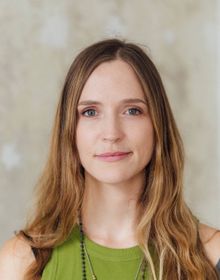
Jana is completing her psychotherapy training under the German licensing system and works clinically with people who are integrating intensive inner experiences. Her practice combines psychodynamic approaches, body-oriented methods, and breathwork, held together by a responsible clinical posture toward non-ordinary states.
The part of her work that lands most directly in this retreat is the cross-cultural one: how Western clinical frameworks meet the relational, ritual, and traditional approaches that practitioners now sit alongside in their rooms. That orientation, and the integration discipline that follows intensive sessions, is what she carries into the room here.
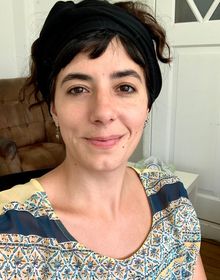
Elena is a psychologist based in Amsterdam working with international clients in Dutch, English, and German, both in person and online. Her practice combines conventional psychotherapy (CBT, ACT, EMDR, somatic approaches, and a current three-year training in Intensive Short-Term Dynamic Psychotherapy, ISTDP) with preparation and integration for psychedelic-assisted sessions and other work in altered states, including breathwork and guided imagery.
She is trained in psychedelic-assisted psychotherapy and integration through the MIND Foundation, and provides psychological screenings for a retreat centre in the Netherlands, informing the intake discipline this retreat applies to its own applicants. She has organised and co-facilitated a number of retreats, and will co-facilitate the OPEN Foundation's ADEPT training self-experience retreat this year. Her clinical bridge between conventional Western psychotherapy and consciousness-oriented work is the bridge the manual asks the room to hold.
Why this room
The difference is the form.
The reciprocity that the work runs on
Most practitioner programmes ask you to sit a peer. This one asks you to be sat by the same peer the next day. The asymmetry that the work runs on becomes reciprocity for three and a half days. One person serves, one person journeys. This reciprocal form is what sets the retreat apart from other programmes.
A screening, not a queue
The application is a screening, not a queue. We read every one. We pair dyads after we meet the full group on the first evening by experience level, by complementary stance, and by any pre-existing relationships in the room. Medical, psychiatric, and medication considerations are part of acceptance, not a separate gate.
A programme in cooperation with a recognised foundation
The retreat is a programme of Psychedelia Retreats, developed in cooperation with the Psychedelia Foundation, a foundation recognised under German law. The manual it operates from is written, dated, and revisable; it is not improvised. The price reflects the seriousness of doing one specific thing well, in a small room, with people who can carry it.
Practical
What the room costs and what it commits to.
Scholarship places are available. If you are interested, please mention it in your application.
Apply
How to apply.
We read every one. We are looking for practitioners who can hold a peer for a day and be held by a peer the next.
We respond to every application within fourteen days.
Application form
Tell us who is asking.
* All fields required